
Overview
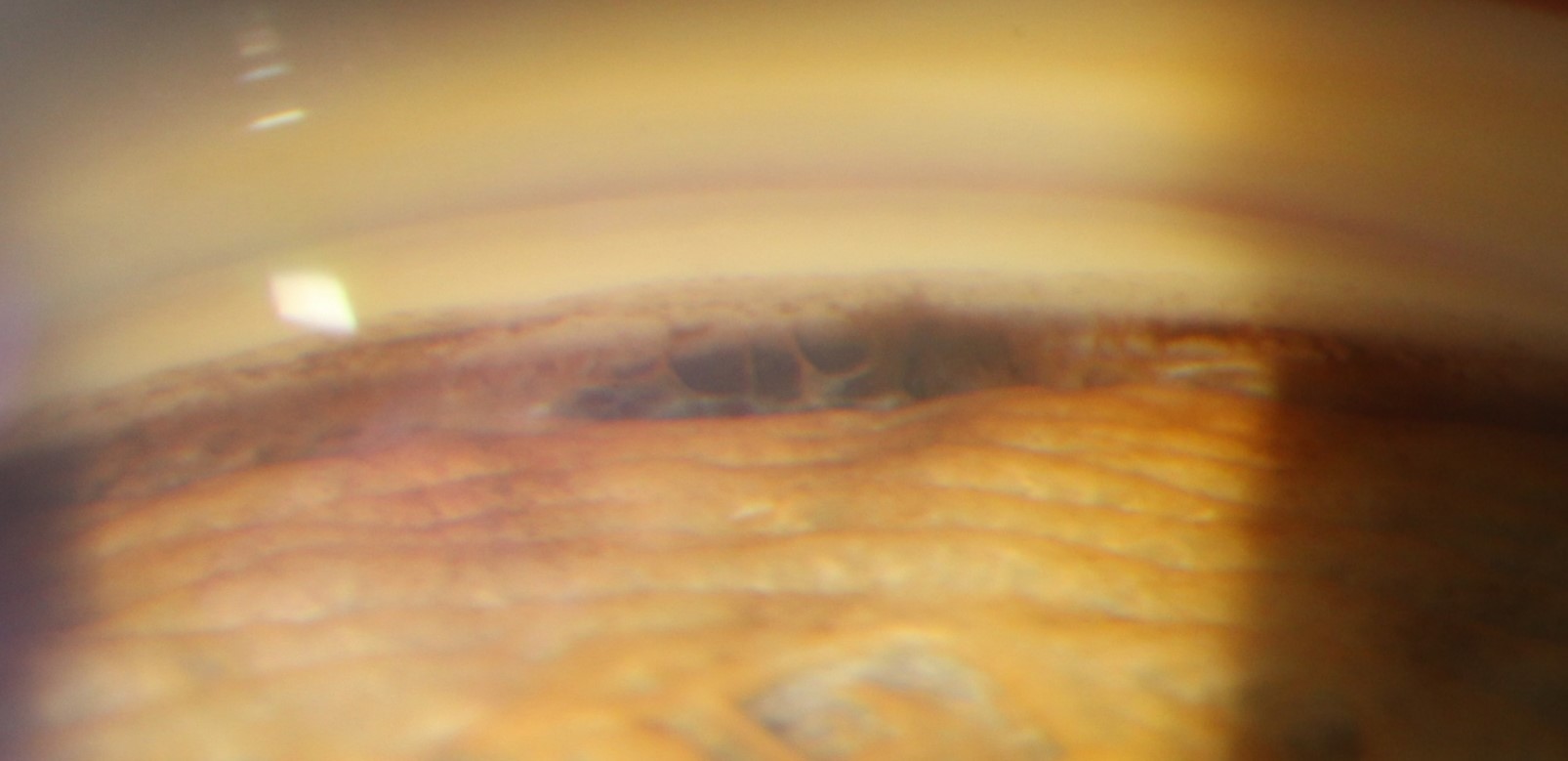
Secondary glaucoma is a term used when there is an identifiable cause of increased intraocular pressure. To better understand the mechanism of damage for each of the secondary glaucomas, it is useful to first review aqueous production and drainage in the normal eye.
The total volume of aqueous humour in the eye is 240-340µm. It is produced by the ciliary processes, and drains through the anterior chamber angle (83-96%) and the uveoscleral route (4-17%). Complete turnover of the aqueous humour takes approximately 2 hours. Damage or blockage of the angle can lead to a reduction in outflow, while aqueous production remains unaffected, leading to a net increase in intraocular pressure.
Secondary open angle glaucoma occurs as a result of a separate condition that results in cells, pigment, blood or other debris obstructing aqueous outflow. Conditions that may potentially cause secondary open angle glaucoma include pigment dispersion syndrome, pseudoexfoliation syndrome, hyphaema (trauma) and steroid-induced glaucoma.
Secondary angle closure glaucoma occurs when the angle is obstructed by iris and/or angle changes, or by a forward movement of the crystalline lens, causing a mechanical obstruction of aqueous drainage termed pupillary block. The most common cause of secondary angle closure glaucoma, particularly in developing countries, is a hyper-mature cataract which causes the lens to move forward, obstructing aqueous outflow.
The links below will allow you to explore the secondary glaucoma sub-topics in greater depth.
Sub-Topics
Other conditions associated with secondary glaucoma include Iridocorneal Endothelial (ICE) Syndrome, ciliary body cysts/tumours, ciliary body swelling (secondary to central retinal vein occlusion, panretinal photogocagulation, drugs or inflammation) and iatrogenic (surgical) causes).