
Overview
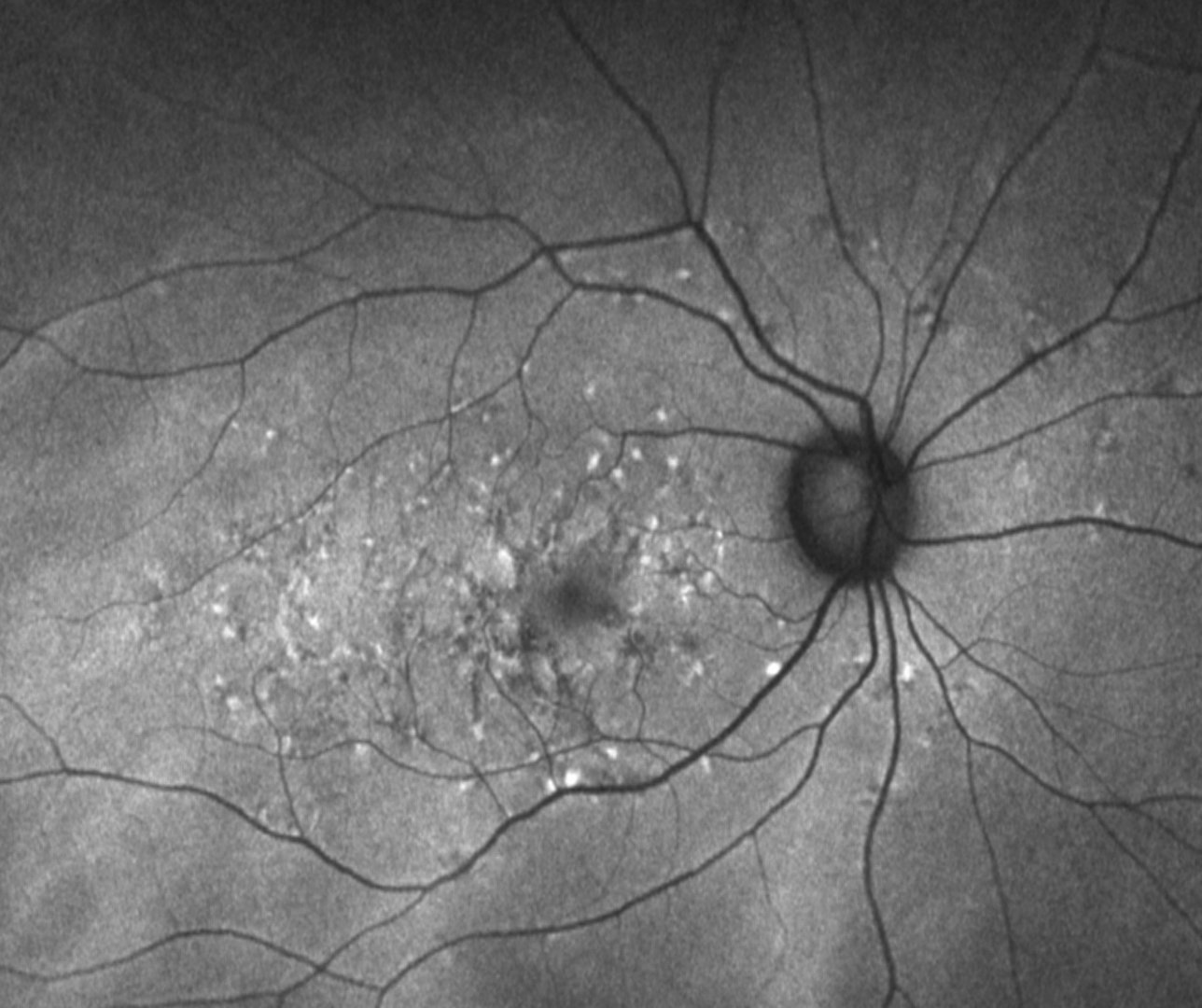
Pattern dystrophies constitute a group of clinically and genetically heterogeneous retinal disorders characterised by a variety of deposits of yellow, orange, or dark pigment, predominantly in the macular area. The age of onset can be quite variable but usually around the 3rd to 5th decade. It is typically slowly progressive with a relatively good visual prognosis, although vision loss can occur as a result of macular atrophy and/or the development of choroidal neovascularisation.
There are five types of pattern dystrophy categorized on the pigment distribution.
1. Adult-onset foveomacular vitelliform dystrophy
2. Butterfly shaped pigment dystrophy
3. Reticular dystrophy of the RPE
4. Multifocal pattern dystrophy simulating Stargardt disease
5. Fundus pulverulentus
The tabs below can be used to find out more about each of these entities and, where possible, a case example is given.